Clips, knobs and covers
Small plastic pieces when the original has cracked, been lost or discontinued.
Site under construction. Some functionality may not work as expected or be available. Questions? Contact support@perea3d.com
Give useful products a longer life
Recreate hard-to-find plastic components through measurement, CAD adaptation and printing in an appropriate material.
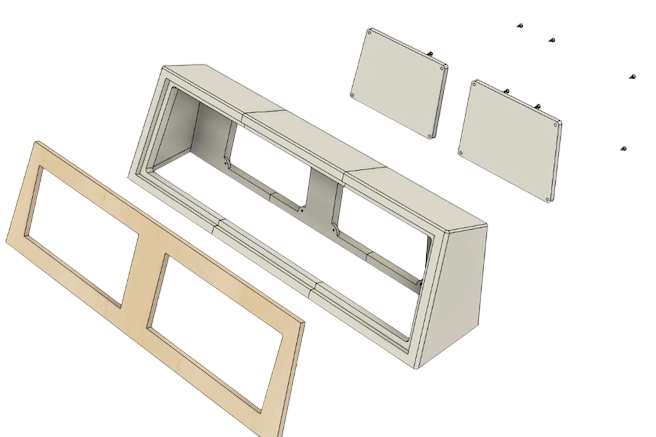
When a plastic component breaks or is no longer sold, 3D printing can be a practical alternative. We identify its function, mating features and operating environment before rebuilding or adapting the geometry. The goal is sound fit and function, not an uncritical copy of an old part.
Small plastic pieces when the original has cracked, been lost or discontinued.
Parts that connect existing products or need to fit a new component.
Guards, holders and other non-safety-critical components in small quantities.
An old part may be worn, deformed or poorly designed. We need to understand which surfaces control the fit and why the original failed.
Safety-critical, pressurized or certified components require special assessment and are not always suitable for printing. We make those limitations clear before work begins.
We review photos, the original part and its environment to judge suitability.
Geometry is measured, scanned or rebuilt in CAD around important interfaces.
A first part can be fitted and adjusted before further pieces are produced.
Overview photos and close-ups with a ruler or another known dimension are especially useful.
No. The original part, clear photos and measurements may be enough for an initial assessment. If a model must be built from scratch, we scope that CAD work in the quote.
Not always. Material, finish and manufacturing process may differ. We focus on fit and function and can sometimes improve a weak detail.
Yes, if enough geometry remains. Symmetry, mating components and known dimensions can help reconstruct the intended shape.
No. Safety-critical, pressurized, medical or certified parts need special documentation and verification. We assess suitability before starting.
Yes. Single replacement parts are a common application, especially when the original is no longer available.
Material is selected for temperature, UV, chemicals, loads and flexibility. Photos and a description of use help us recommend an option.
Attach photos and describe its function. We will assess whether it can be recreated and what is involved.
Request a quote