Parts without drawings
Create a digital reference when original CAD is missing or a component has been discontinued.
Site under construction. Some functionality may not work as expected or be available. Questions? Contact support@perea3d.com

From physical part to digital geometry
Digitize existing objects for measurement, documentation, adaptation or development of a new CAD model.
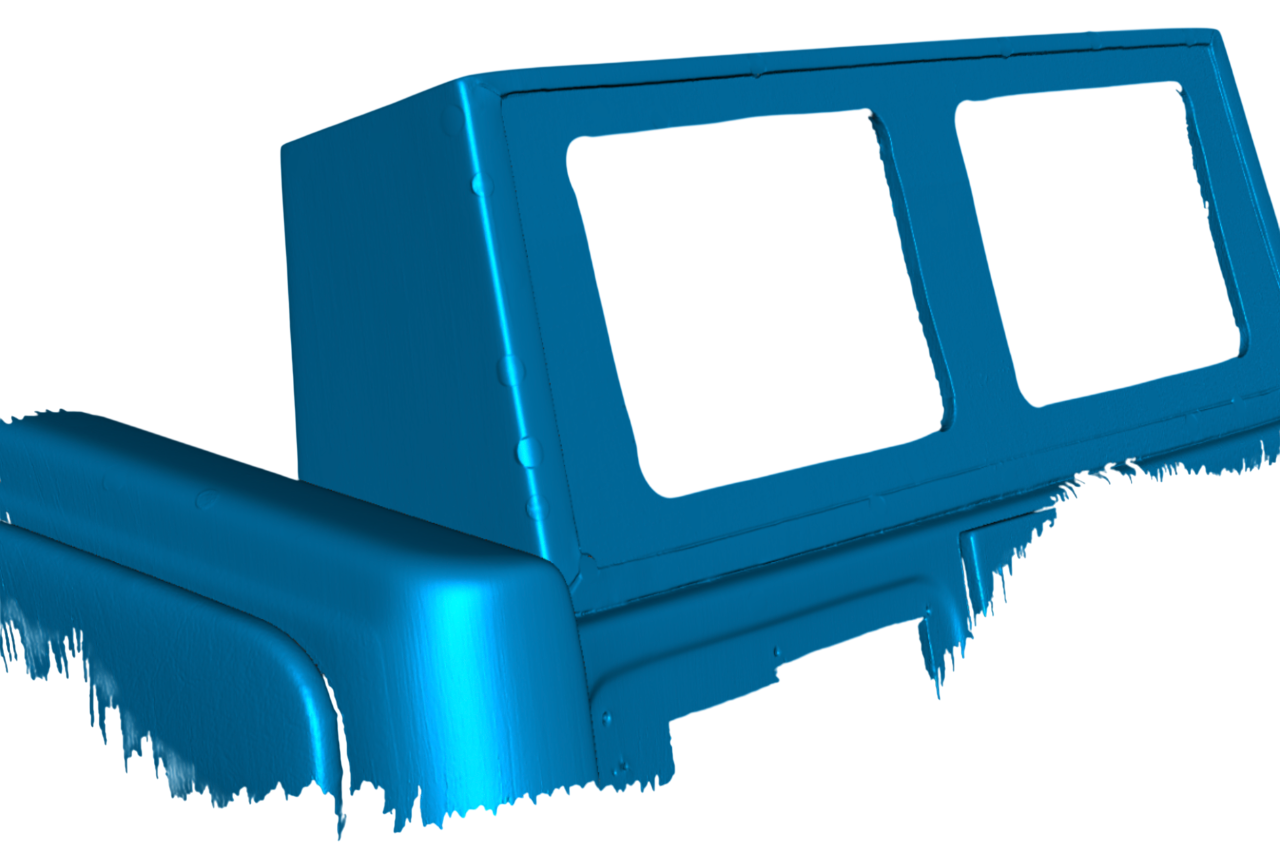
3D scanning captures an object's surface as a digital point cloud or mesh. It is useful when drawings are missing, but scan data is not automatically a parametric CAD model. We define the deliverable according to whether you need documentation, comparison, visualization or manufacturable geometry.
Create a digital reference when original CAD is missing or a component has been discontinued.
Capture organic or complex surfaces that a new component needs to meet.
Preserve geometry digitally or compare a physical shape with a design reference.
A mesh describes the measured surface as triangles and is useful for visualization, reference and some printing workflows. Parametric CAD instead uses defined planes, cylinders and features that can be dimensioned and edited.
Reverse engineering therefore involves more than scanning. Accuracy requirements, wear, symmetry and intended use determine how much interpretation and rebuilding is needed.
We review size, surface, access and the desired deliverable.
The object is scanned from several angles and the measurements aligned and cleaned.
Scan data is delivered as a mesh or used as reference for a new CAD model.
Photos with a known size reference are often enough for an initial assessment.
Not automatically. The base result is usually a mesh. Editable parametric CAD requires separate reverse-engineering work to interpret and rebuild the geometry.
Most objects can be scanned, but transparent, reflective, very dark or inaccessible surfaces may require surface preparation, targets or additional measurement.
It depends on object size and surface, scanner, setup and processing. Identify critical dimensions so the appropriate method can be chosen.
Yes, but wear must be interpreted. Symmetry, mating features and known dimensions help reconstruct intended geometry rather than simply copying damage.
Meshes are commonly supplied as STL or OBJ. If the project includes reverse engineering, STEP or another CAD format can be agreed.
That depends on size, accuracy needs and the planned workflow. Send photos and dimensions so we can assess the best way to capture it.
Send photos, approximate dimensions and explain how the digital model will be used.
Request a quote