Fixtures and workshop aids
Jigs, holders and tools that make repeated assembly or workshop tasks easier.
Site under construction. Some functionality may not work as expected or be available. Questions? Contact support@perea3d.com

Robust thermoplastic components
Cost-effective printing for fixtures, housings, prototypes and small batches in engineering plastics.
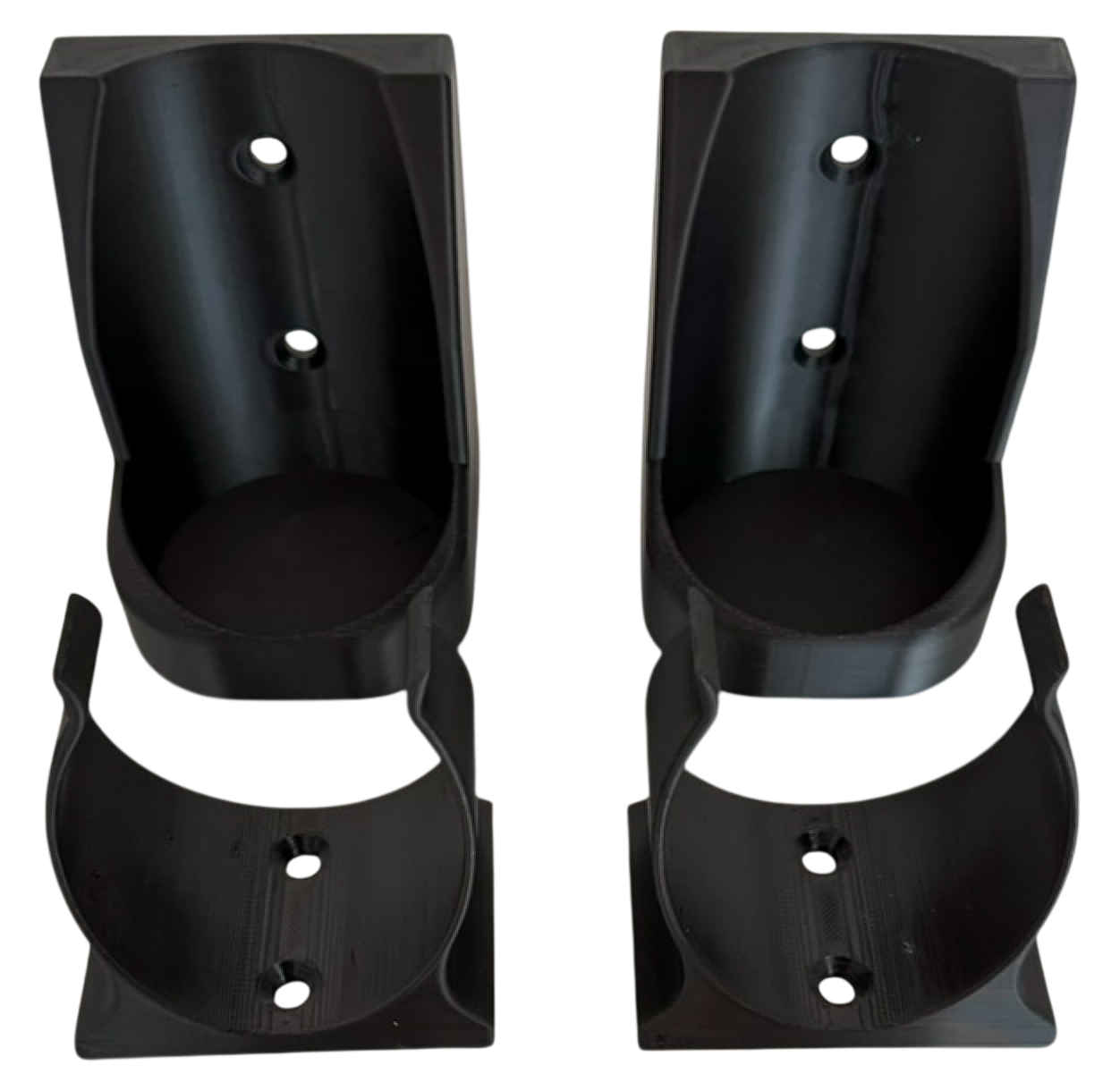
FDM builds a part layer by layer from molten thermoplastic. It offers a broad material selection and is especially useful for functional parts, larger geometry and recurring low-volume production. Design and orientation are chosen with the part's loads in mind.
Jigs, holders and tools that make repeated assembly or workshop tasks easier.
Custom enclosures, supports and adapters with integrated mounting features.
Parts for fit, movement and basic load checks before final manufacture.
An FDM part is usually strongest within a layer and weaker between layers. Build orientation therefore affects strength, appearance, supports and cost.
Typical tolerance is ±0.2 mm or ±0.1% (whichever is greater), but geometry, size and material affect the result. Mark critical fits; they may need machining or first-article testing.
We examine loads, environment, fits and desired finish.
The part is oriented for a sensible balance of strength, finish and support area.
Supports are removed and agreed dimensions or functions are checked.
Clear operating requirements help us choose the plastic and build direction.
Typical tolerance is ±0.2 mm or ±0.1%. Small holes, long flat surfaces and high-shrink materials may need special attention or finishing.
Common choices include PLA, PETG, ABS, ASA and flexible materials. The right choice depends on heat, UV, impact, chemicals and required stiffness.
No. Bonding between layers means build orientation affects strength. Describe the load case so we can account for it.
Larger threads can be printed directly. Heat-set or other inserts are often better for repeated fastening or higher loads.
Yes, with a suitable material. ASA is often preferable to PLA under UV and weather exposure.
Choose SLA when very small details, smooth surfaces or fine lettering matter more than FDM's material range and economy.
Send your model and operating requirements for a material and orientation recommendation.
Request a quote